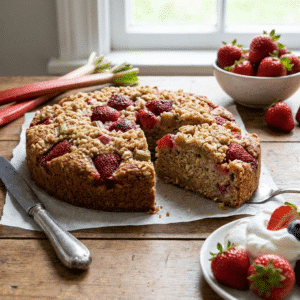
Your Kaiserschmarrn Dream: The Original Recipe from Salzburg!
The Imperial Origins of Kaiserschmarrn: Legends and Facts
The name of the popular Austrian sweet dish “Kaiserschmarrn” is shrouded in numerous legends, almost all of which trace back to Emperor Franz Joseph I (1830-1916). Although there isn’t a single, historically verified origin story, several amusing anecdotes revolve around the naming of this “torn pancake.”
Legends Surrounding the Emperor
The most well-known stories directly link the name to the monarch:
A Mishap in the Imperial Kitchen: One of the most popular legends claims that the imperial chef once failed to make perfect “Palatschinken” (crêpes) for the Emperor – they turned out too thick or tore when flipped. In his distress, he served the “failed” dessert with raisins and powdered sugar, calling it “Schmarrn” (a mess or nonsense). However, the Emperor is said to have enjoyed it so much that it was henceforth known as “Kaiserschmarrn” (Emperor’s mess) on the menu.
A Dessert for the Empress: Another variation tells that the sweet dish was originally created for Empress Elisabeth (Sisi), who was very mindful of her figure. When she rejected the “Schmarrn” as too rich for her, Emperor Franz Joseph is said to have taken the portion with the words, “Well, then give me the ‘Schmarrn’ that our Leopold cooked up again!” Thus, “Kaiserinschmarrn” (Empress’s mess) became “Kaiserschmarrn.”
A Fortifying Meal During a Hunt: Another story places the origin in the Salzkammergut region. During a hunting trip, the Emperor was supposedly served a simple “Holzfällerschmarren” (lumberjack’s mess). In his honor, this hearty dish was refined with more delicate ingredients like milk, eggs, and raisins, thus earning its “imperial” title.
Kaiserschmarrn – A Traditional Recipe
Ingredients for 2-4 servings:
4 eggs (medium), separated
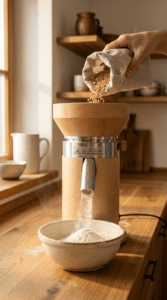
125 g all-purpose flour (finely milled from a Salzburg grain mill!) The quality of the flour makes a huge difference to the fluffiness of your Schmarrn. Check out their website https://natural-grainmills.us ; you’ll find great products there.
250 ml milk (whole milk)
30-50 g sugar (granulated sugar)
1 pinch of salt
Optional: 50 g raisins (possibly soaked in rum or water)
2 tbsp butter or clarified butter for frying
Powdered sugar for dusting
Accompaniment: Zwetschgenröster (plum compote), apple sauce, or lingonberries
Preparation:
Preparation: If using raisins, soak them in a little rum or water for about 15-30 minutes. Separate the eggs.
Prepare the batter: In a bowl, whisk the egg yolks with the milk, flour, sugar, and a pinch of salt to form a smooth batter. If the batter is too thick, a small splash of sparkling water can be added. Let the batter rest for about 10-15 minutes.
Whip egg whites: In a separate, grease-free bowl, beat the egg whites with a pinch of salt until stiff peaks form. The egg whites are perfect when they are so firm that they don’t fall out when you turn the bowl upside down.
Fold in egg whites: Carefully and gently fold the stiffly beaten egg whites into the batter. Do not stir too much to keep the batter airy. Now, if desired, fold in the drained raisins.
Frying: Heat a large, non-stick pan (oven-safe if you plan to finish baking it in the oven) over medium heat. Melt some of the butter or clarified butter in it.
Baking: Pour the entire batter (or half, depending on the pan size) into the pan. Bake the pancake over medium heat until the bottom is golden brown and the surface is slightly set. Now, flip the pancake or divide it into quarters and flip.
Tear and Caramelize: Using two forks or a spatula, tear or cut the pancake into irregular, bite-sized pieces. Sprinkle some granulated sugar over the pieces and, if necessary, add the remaining butter, stirring until golden brown and caramelized.
Tip: Many classic recipes suggest finishing the “Schmarrn” in a preheated oven (approx. 180-200°C / 350-400°F top/bottom heat) for a few minutes after initial frying, until it’s golden brown and cooked through. Afterward, it’s torn in the pan and caramelized.
Serving: Arrange the finished Kaiserschmarrn on plates and generously dust with powdered sugar. Serve immediately with plum compote, apple sauce, or lingonberries.
Source Note:
As mentioned, there is no single “original source.” This recipe is a typical representation of the traditional preparation method and is based on common Austrian cookbooks and culinary traditions. Many tourism portals and established Austrian restaurants (such as Figlmüller in Vienna) offer similar recipes that are considered authentic. The history of its origin, however, is more anecdotal than a verifiable source for a specific recipe.