Why Granite Millstones Matter for Real Flour
Natural stone, handcrafted tradition, and the taste of real bread — discover why Salzburg mills still use authentic granite millstones.
The Soul of Traditional Milling
Long before industrial milling began, bakers in the Alpine regions used granite millstones — not for nostalgia, but for the quality of the flour.
Granite is a living rock: porous, cool, and rich in natural energy. It grinds slowly, preserving the nutrients, aromas, and vitality of the grain.
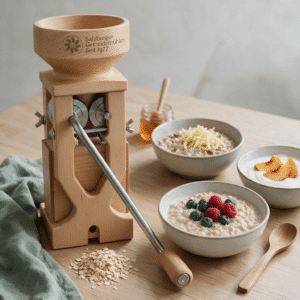
Every Salzburg grain mill still follows this tradition. Each millstone is carefully selected, shaped, and balanced by hand in Austria.
This slow, rhythmic grinding creates a fine, warm flour that breathes — just like bread once did.
Why Not Steel or Ceramic?
Modern materials may be fast, but they change the soul of the flour.
Steel burrs generate heat that destroys enzymes.
Ceramic stones, though hard, are lifeless — they grind sharply, not gently.
Granite, in contrast, rubs the grain open instead of crushing it. The result: flour that keeps its oils, vitamins, and natural sweetness.
Health, Taste and Longevity
A granite millstone will last for generations. Its surface self-renews as it works.
There is no coating, no synthetic resin — only pure, natural stone.
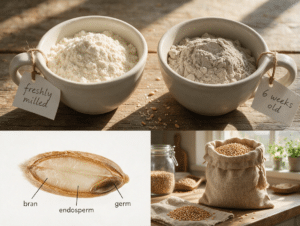
That’s why fresh-milled flour from a Salzburg mill tastes full-bodied, rich, and alive.
Handcrafted in Austria
Each mill is crafted from local beech or alder wood, combined with hand-dressed granite stones.
From the heart of Salzburg to kitchens across the world — a legacy of honest craftsmanship and timeless taste.