Freshly milled rye, spelt, and emmer for honest flavor, a crackling crust, and a tender, nourishing crumb.
Why skip durum wheat?
Durum wheat favors factory-style bread: strong gluten and uniform volume. If you want depth, character, and a satisfying crumb, choose grains that shine for flavor — not just loft. Rye and spelt offer a fuller taste and a more grounded, traditional texture.
Freshness is the secret
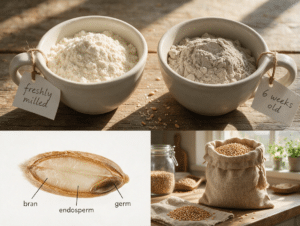
Freshly milled flour preserves natural oils, vitamins, and aroma. Your dough feels livelier, your crust crackles, and the flavor is layered and memorable. This is the difference you can taste — and smell — from the very first bake.
How to start at home (it’s easy)
- Mill just before mixing: Spelt fine, rye medium-fine.
- Keep it simple: Flour, water, salt, and sourdough (or a little yeast).
- Let time work: Rest, fold, and give the dough an unhurried rise.
- Bake boldly: Preheat a Dutch oven; aim for a deep, singing crust.
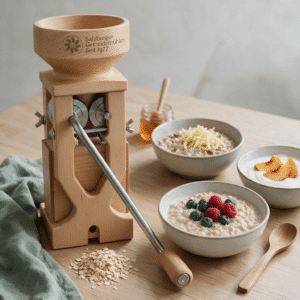
With a Salzburger Grain Mill, you set your grind — from fine flour to rustic meal — for bread with real personality.
Ready to bake like grandma?
Choose rye, spelt, or emmer. Mill fresh. Bake with patience and heart. Every slice proves: great bread doesn’t start in the oven — it starts at the mill.
FAQs
Is rye too dense for beginners?
Try a 20–40% rye blend for moisture, keeping quality, and gentle tang — a friendly entry into old-world flavor.
What makes spelt special?
Spelt brings a naturally sweet, lightly nutty profile and works beautifully for open, tender crumbs.
Do I need sourdough?
Sourdough is traditional and delicious with rye. You can start with a small amount of yeast, then transition to sourdough as you grow confident.