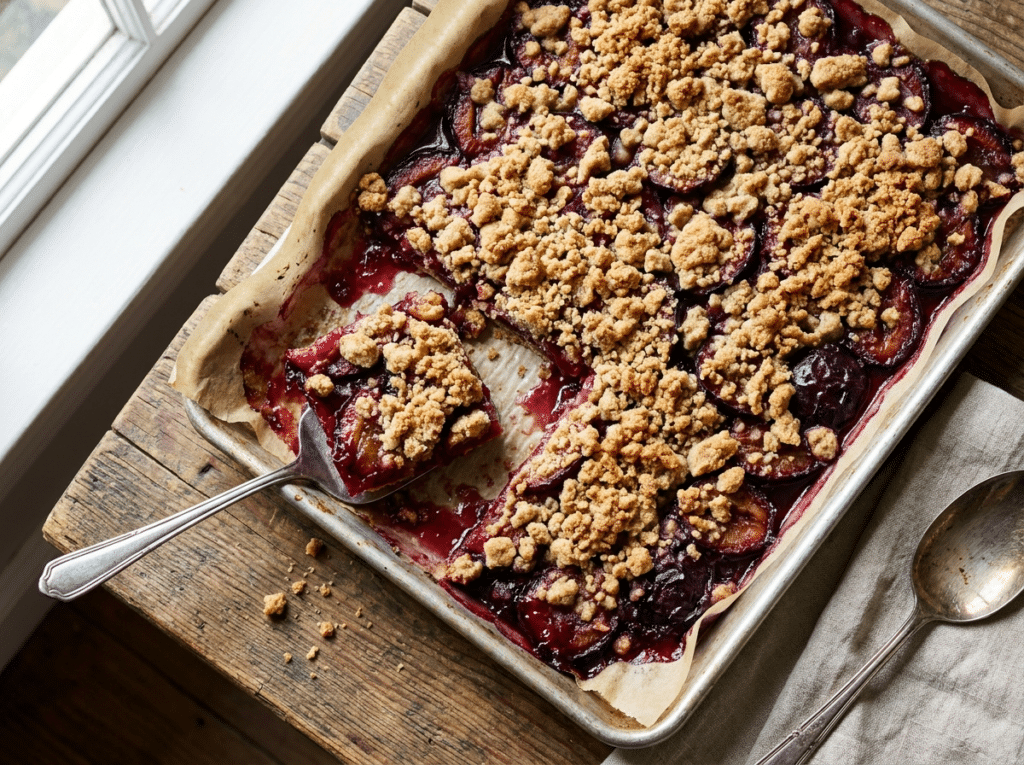
 In Austria, late summer has a flavor, and it is this cake. When the plum trees hang heavy and the fruit carries that dusty blue bloom, Zwetschkenfleck appears on kitchen tables across the country. One sheet pan rarely lasts two days.
If you have ever bought Italian prune plums at a farmers market in September and wondered what to do with three pounds of them, this is the answer. And if you have a grain mill on your counter, it is the recipe that will convince the skeptics at your table that whole grain is not a compromise.
The Austrian original uses Zwetschken — small, oval, deep-purple plums with firm flesh and a stone that slips out cleanly. In the United States they are sold as Italian prune plums or empress plums, usually from late August through September.
Round red or black plums will work, but they carry more water and less acidity. If that is what you have, use a little less sugar on the fruit and add ten minutes to the bake.
A yeasted dough wants finely milled flour, so set your mill to its finest setting. On a Salzburg Grain Mill MT-12 or a comparable electric mill, 500 g of spelt takes only a few minutes.
One practical detail: flour that just came out of the mill is still slightly warm and absorbs a little more liquid than flour that has been sitting in a bag. Let it come to room temperature, and hold back 2–3 tablespoons of the milk while kneading so you can adjust.
No spelt on hand? Whole wheat works just as well and comes out a touch milder. A blend of 400 g spelt and 100 g wheat gives a particularly supple dough.
Yeasted dough
Topping
Streusel
1. Start the dough Dissolve the yeast in the lukewarm milk with a teaspoon of the sugar and let it sit for 10 minutes, until foamy. Combine flour, remaining sugar, salt and lemon zest in a bowl. Add the yeast milk, the eggs and the softened butter.
2. Knead Knead for 8–10 minutes, until the dough is smooth and pulls away from the side of the bowl. Whole grain dough feels stickier at first than dough made with white flour — resist the urge to add much more flour. It becomes supple on its own as you work it.
3. First rise Cover and let rise in a warm spot for about 60 minutes, until noticeably increased in volume. Whole grain doughs typically need 10–15 minutes longer than white ones.
4. Prepare the plums Wash, halve and pit the plums. If you like, score each half once more without cutting all the way through — they fan open slightly as they bake.
5. Assemble Roll the dough out on a greased sheet pan and scatter the breadcrumbs across it. Set the plum halves cut side up, packed tightly together — they shrink considerably in the oven, so crowd them. Sprinkle with cinnamon and sugar.
6. Streusel Rub all streusel ingredients together with cold fingers into coarse crumbs and scatter over the plums. Do not overwork it — large crumbs are better crumbs.
7. Bake Let rest another 20 minutes, then bake at 350 °F (180 °C) for 40–45 minutes, until the streusel is golden and the plums have released their juices.
8. Cool Cool in the pan. The cake is at its best slightly warm, but keeps covered for two to three days — assuming it survives that long.
Keeping the base dry: That layer of breadcrumbs between dough and fruit is not a detail — it is the single most important step in the recipe. It absorbs the juice the plums release.
Go easy on the sugar: Ripe prune plums bring plenty of their own sweetness. Taste one before you sugar the fruit; you often need noticeably less than the recipe says.
Streusel with oats: If you have a SALZBURG FLAKEMASTER, fold two handfuls of freshly flaked oats into the streusel. It adds bite and a deeper, toastier aroma.
The germ inside the grain carries the oils that carry the flavor. The moment the grain is milled, those oils meet air and begin to oxidize. Bagged whole wheat flour has usually had weeks to do exactly that — which is the real reason so many people associate “whole grain” with “bitter.”
Mill just before you bake and the problem never begins. This cake then tastes of grain, butter and fruit, and of nothing else.
Happy baking, and enjoy the last weeks of summer.
Which plums do you get where you live? Tell us in the comments — we love hearing how this Austrian classic travels.