 When the first Hokkaido pumpkins show up at the market in October, the best baking season of the year begins. Pumpkin brings moisture, colour and a gentle sweetness to bread – and that is exactly what whole spelt flour needs to stay tender.
This loaf works without sourdough. It takes no practice, just freshly milled flour and a little patience while it rises.
Spelt has a delicate gluten structure. Bagged flour from the shelf is often weeks old, its oils already turning, and you taste that as a faintly bitter aftertaste. Freshly milled, spelt stays nutty and slightly sweet – and that is exactly the note that suits pumpkin.
There is a second reason. Freshly milled whole grain flour absorbs noticeably more liquid. The pumpkin supplies it, with no extra water at all. That is why this bread turns out moist rather than dry – the single most common complaint about whole grain bread.
Milling setting: mill fine, but not on the finest setting. A hint of texture gives the dough structure. Mill right before baking, not the night before.
Cut the squash into wedges and scoop out the seeds; the skin stays on. Roast at 400 °F (200 °C) for about 25 minutes, until the wedges are soft and browning at the edges. Then mash roughly and let cool to hand temperature.
Boiled pumpkin pulls in water, roasted pumpkin concentrates the flavour. This is the most important step in the whole recipe.
Mill the spelt fine and combine it with the salt, yeast and spices. Add the pumpkin, vinegar and oil, then knead for five minutes into a soft, slightly sticky dough. Work in the pumpkin seeds only at the very end.
The dough is meant to be soft. Adding more flour now gives you a dry loaf. Wet your hands instead.
Cover and let rise for 60 to 90 minutes, until clearly increased in volume. Spelt does not tolerate over-proofing: as soon as the dough has visibly risen, shape it. Wait too long and the loaf collapses in the oven.
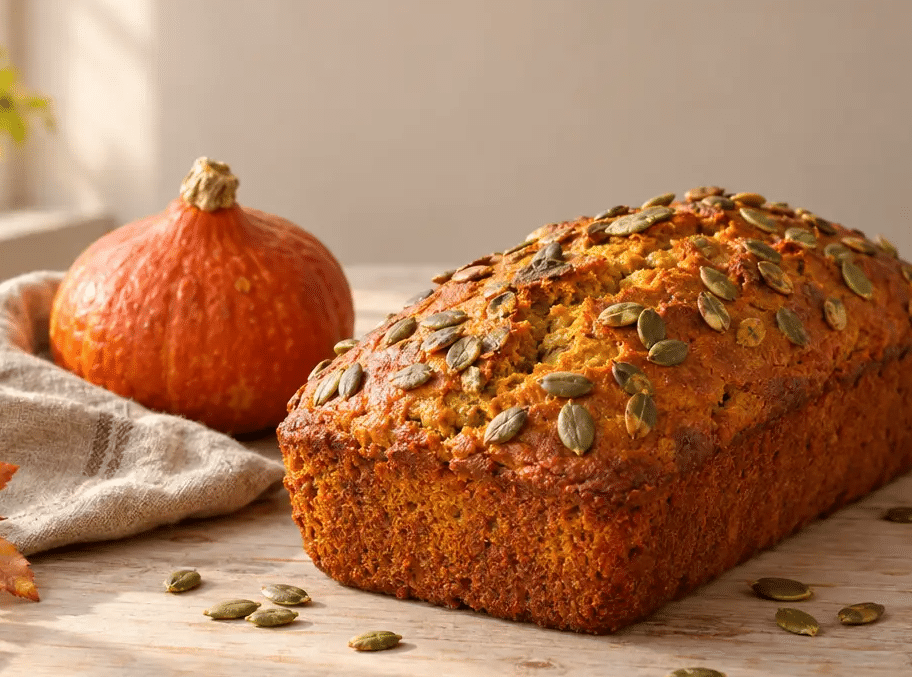
Shape into an oblong loaf, place in a greased loaf pan, brush with water and scatter pumpkin seeds on top. Rest for another 30 minutes.
Bake at 425 °F (220 °C) with a pan of water in the oven for 15 minutes, then reduce to 375 °F (190 °C) and bake for another 35 minutes. The loaf is done when it sounds hollow and the internal temperature reaches about 205 °F (96 °C).
Let it cool completely before slicing – at least two hours. Cut warm, any whole grain bread will seem gummy.
The pumpkin keeps this loaf soft for four to five days, wrapped in a linen towel at room temperature. Not in the refrigerator, where bread goes stale faster. Sliced and frozen it keeps for two months and toasts straight from frozen.
Serve it with cream cheese, a sharp alpine cheese or simply good butter. And while the oven is hot: a double batch is almost always worth it.