 August is a season of abundance. Farmers’ markets are filled with late-summer produce, gardens are reaching their peak, and many families begin preparing their kitchens and pantries for fall. It is also an ideal time to think more closely about one of our most important foods: grain.
For health-conscious home bakers, homesteaders, and environmentally minded families, home milling creates a direct connection between the harvested kernel and the food on the table. Whole grains can be stored and milled as needed for bread, pancakes, pizza, muffins, and hearty whole grain meals.
When you mill grain at home, you decide which grain to use, how much flour to make, and how fine or coarse the result should be. Instead of treating flour as an anonymous pantry ingredient, home milling brings the character of wheat, spelt, rye, buckwheat, and other grains back into everyday cooking.
Wheat and spelt are approachable choices for beginners. Depending on the recipe, they can be milled into fine flour for baking or adjusted to a coarser texture for rustic breads and hot cereals. Always use clean, dry grain. Excess moisture can cause natural millstones to become coated and may interrupt the milling process.
August stands between harvest and preparation. Summer ingredients are still plentiful, while the first signs of fall baking are beginning to appear. Freshly milled whole grain flour works beautifully in zucchini bread, peach muffins, rustic loaves, pancakes, and early apple recipes.
It is also a practical month for homesteaders and preparedness-minded households to build a modest grain pantry. There is no need to purchase every variety at once. Starting with two or three grains makes it easier to learn their flavors, textures, and milling characteristics.
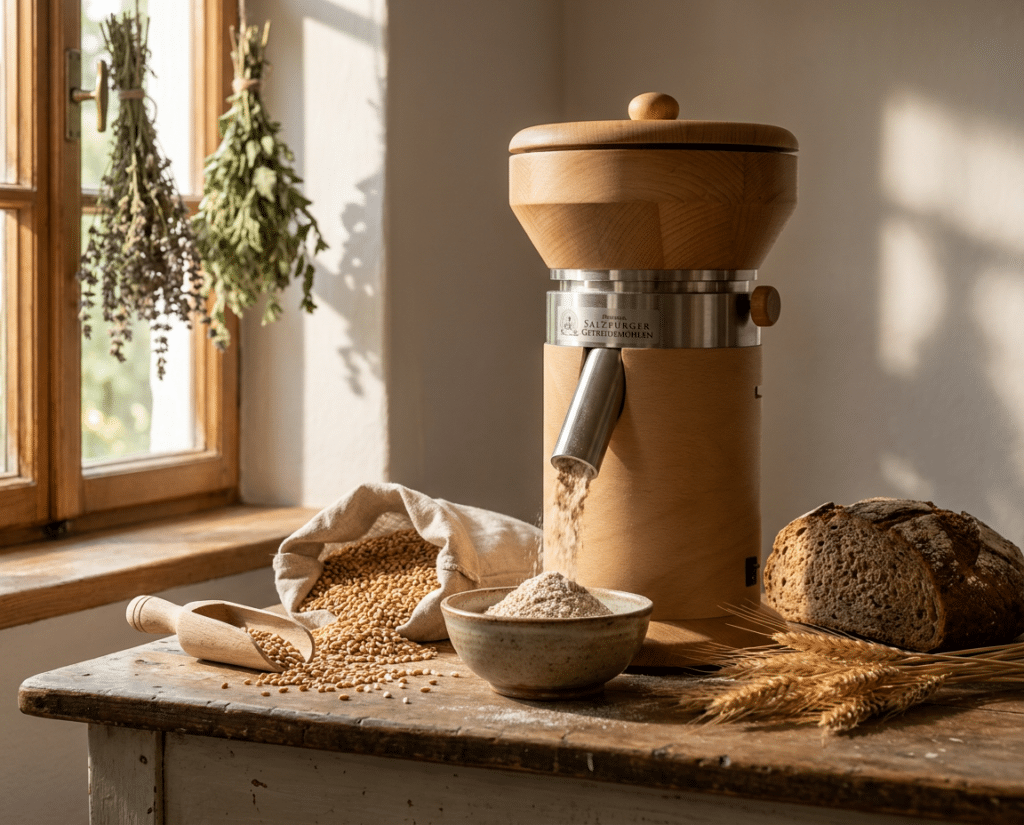
Salzburg grain mills are built around naturally occurring granite millstones rather than manufactured corundum-ceramic stones. Their wooden housings reflect a tradition in which natural materials, skilled craftsmanship, and long-term use matter more than mass production.
This approach comes from Austrian milling culture, where the mill is not simply another countertop appliance. It is a working connection between grain, flour, and daily bread. Every handful of flour begins with a conscious choice of ingredients and materials.
For households that mill frequently or prepare larger home-baking quantities, the Salzburg MT-12 provides a substantial home milling option. A more compact model such as the Kornelia MH-6 may suit smaller households and regular baking routines. Families who also want freshly rolled oats can pair their grain mill with a hand-operated flaker such as the Flakemaster.
You do not need a large pantry or advanced baking experience to begin. Choose one dependable bread grain, use a familiar recipe, and mill only the amount you plan to use. Try a few different settings and notice how the texture of the flour changes the dough and finished bake.
Over time, a bag of grain becomes more than an ingredient. It becomes a link between agriculture, traditional craftsmanship, and homemade food. August offers a natural moment to begin: close to harvest, rich in seasonal inspiration, and perfectly timed for the fall baking season ahead.