Here in Salzburg, Austria, early November brings dark evenings and, all of a sudden, little lights glowing everywhere: children walk through the streets with homemade paper lanterns, singing songs for St. Martin. In our family, that evening also calls for something warm from the oven. Today we’d love to share the story of St. Martin’s Day, an old Austrian tradition, and show you how to bake St. Martin’s Day crescent rolls with freshly milled spelt.
In our little hometown of Hallein, the kitchen smells of sweet yeast dough every year around November 11. And the moment the first golden crescents come out of the oven, everyone somehow shows up wanting to “just try one.”
November 11 is the feast day of St. Martin of Tours, who lived in the 4th century and started out as a Roman soldier. The best-known story about him goes like this: on a freezing winter day, Martin met a shivering beggar at the city gate. Without a second thought, he cut his cloak in half with his sword and gave one half to the man. Martin later became the Bishop of Tours.
Geese have a part in his legend, too. As the story goes, Martin didn’t want to become a bishop and hid in a goose pen, but the geese honked so loudly that they gave him away. That may be one reason why roast goose, the “Martinigansl,” shows up on so many Austrian restaurant menus around St. Martin’s Day.
Today, most Austrian families think of the lantern walk first. Preschools, schools and parishes start making paper lanterns weeks ahead, and on St. Martin’s evening the kids head out with their glowing lights. It’s all about what Martin stood for: sharing with others and being a light for them.
In the old days, St. Martin’s Day was also a key date in the farming year. The harvest was in, the fieldwork was mostly done, and in many places rents and dues were paid around this day. Then came the quieter season leading toward Advent and Christmas. In a way, it’s a little like Thanksgiving: a time to gather, give thanks for the harvest and share a good meal.
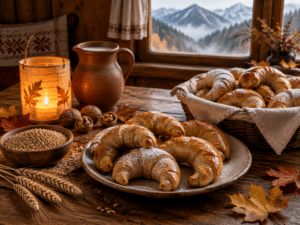
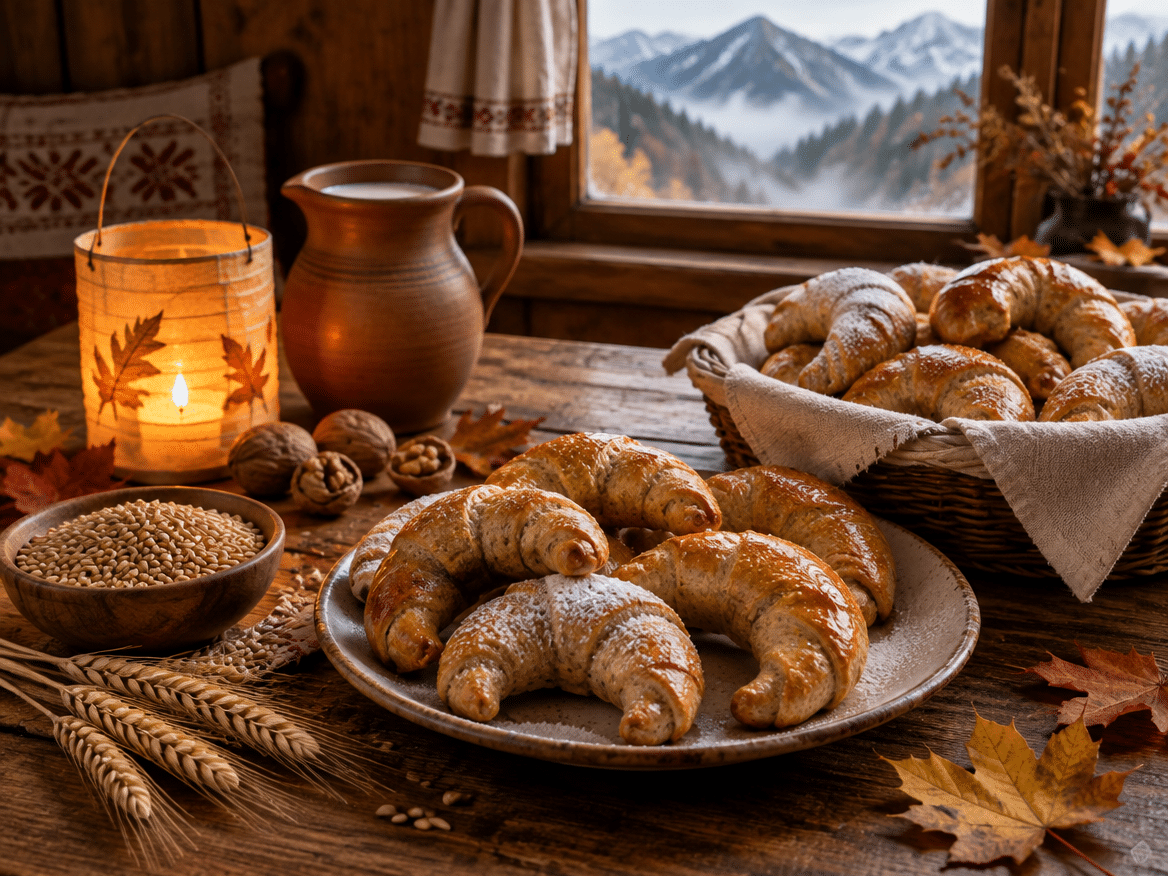
In some places, crescent-shaped yeast pastries are baked for St. Martin’s Day. People like to say the curved shape is a reminder of the horseshoe of Martin’s horse. No one knows for sure if that’s truly where they come from, but it’s a sweet thought. And it’s even sweeter when children share their crescent after the lantern walk, just like Martin shared his cloak.
Our crescent rolls are soft, fluffy and only lightly sweet, and they’re just as good plain as they are with jam. Freshly milled spelt gives them a mild, nutty flavor. They’d also make a lovely addition to your Thanksgiving bread basket. For about 12 crescent rolls you’ll need:
Mill the spelt on a fine setting and add it to a large bowl. Dissolve the yeast in the lukewarm milk with a teaspoon of the sugar. Add the milk, remaining sugar, salt, egg, lemon zest and softened butter to the flour and knead for 8 to 10 minutes until you have a smooth, soft dough. Freshly milled whole grain flour absorbs a bit more liquid, so add a splash more milk if the dough feels stiff.
Cover the bowl with a kitchen towel and let the dough rise in a warm spot for about 60 minutes, until it has visibly grown. In the fall, ours likes to sit next to our old tiled stove.
Divide the dough in half. On a lightly floured surface, roll each half into a circle about 12 inches (30 cm) across. Cut each circle into 6 wedges, like a pie. If you like, add a small spoonful of jam or plum butter to the wide end of each triangle.
Roll up each triangle from the wide end toward the tip and gently curve the ends into a crescent. Place them on a parchment-lined baking sheet, cover and let them rise for another 20 minutes while you preheat the oven to 350 °F (180 °C). Brush with the egg wash and bake for 15 to 18 minutes until golden brown.
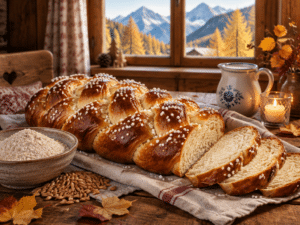
Our tip: these crescent rolls taste best while still a little warm. For a sweeter treat, dust them with powdered sugar once they’ve cooled. And if you love this dough, try our Austrian braided bread for All Saints’ Day, too.
St. Martin’s crescent rolls are a wonderful recipe to bake with kids. Rolling, cutting and shaping is a lot of fun for little hands, and the crescents don’t all have to look the same. Put a few in a basket for a fall get-together, or drop some off at your neighbor’s door. That’s exactly what St. Martin would have done.
With your Salzburg grain mill, you mill your spelt right when you need it and bring the full flavor of the whole kernel into your baking. That’s how a simple yeast dough turns into a little fall celebration, Austrian style. You’ll find our grain mills and flakers, made for North American kitchens, at natural-grainmills.us. From our family in Salzburg to yours: happy St. Martin’s Day and happy baking!
Facebook teaser:
When the lanterns glow in Salzburg, our kitchen smells of fresh yeast dough! For St. Martin’s Day on November 11, we bake soft crescent rolls with freshly milled spelt, a sweet Austrian tradition that’s all about sharing. They’d look lovely in your Thanksgiving bread basket, too. Get the story and our 4-step recipe in cups and °F: https://natural-grainmills.us/st-martins-day-crescent-rolls-freshly-milled-spelt/ #StMartinsDay #CrescentRolls #FallBaking #HomeMilling #FreshlyMilledFlour